How AI Improves Patient Communication in Dentistry: Building Trust Through Transparent Clinical Reasoning
Dentistry has never been more advanced, yet there's something most dentists are missing. AI is going to change dentistry in the most important way—not by replacing clinicians, but by transforming how we teach.
AI in dental practice isn't just automation, diagnosis, or efficiency. It can become a structured educational layer that upgrades case presentation, improves patient trust, and creates better decision-making. And ultimately, it's about securing your ROI.
The Real Problem in Modern Dentistry
Dentistry has never been more advanced. We plan implants in 3D, restore full arches with incredible precision, and use materials that can deliver outcomes our mentors could only dream of. But despite all this progress, there is one thing that still quietly determines whether treatment succeeds or fails, whether a patient feels safe or fearful, and whether the practice grows or struggles.
Dental patient communication.
Not the type of communication where we quickly explain a treatment plan and hand a patient an estimate. I mean the deeper skill: translating clinical reasoning into language that the patient can actually understand, emotionally and intellectually. Because many cases do not fail due to poor dentistry. They fail because the patient never truly understood what was happening.
A Patient's Reality
They agree, but they are not confident. They move forward, but they are not committed. They nod, but they leave with confusion. And confusion becomes doubt. Doubt becomes delay. Delay becomes non-action. And even the best dentistry begins to break down if the patient is not fully on board.
This communication gap is the foundation of poor case acceptance in dentistry—and it's where AI-assisted patient education can make the biggest difference.
Real Case Scenario: When History Repeats Itself
I recently had a case that made this clearer than ever. A patient came into my office after fracturing two virgin teeth clean down the middle over a period of 12 months. No crowns. No large restorations. No warning signs from his perspective, although he is clearly a heavy bruxer. These were teeth he assumed were "strong forever," and suddenly they were gone. The shock of that kind of failure is difficult to explain unless you have seen it in the eyes of the patient. They are not only dealing with lost structure. They are dealing with the fear that their mouth is unpredictable.
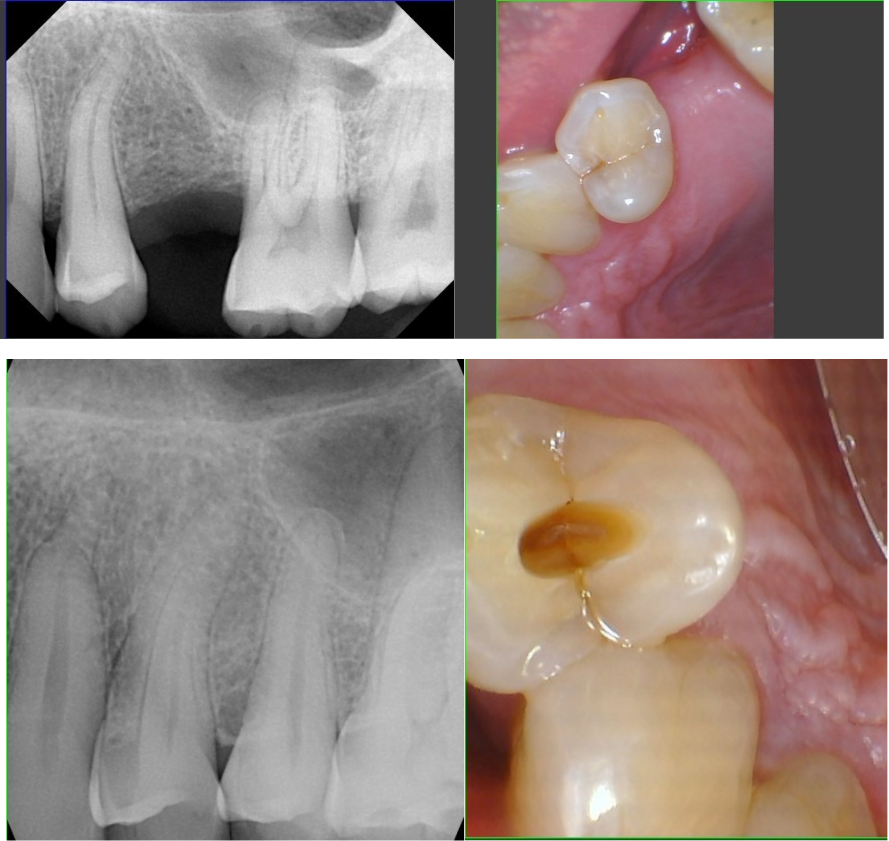
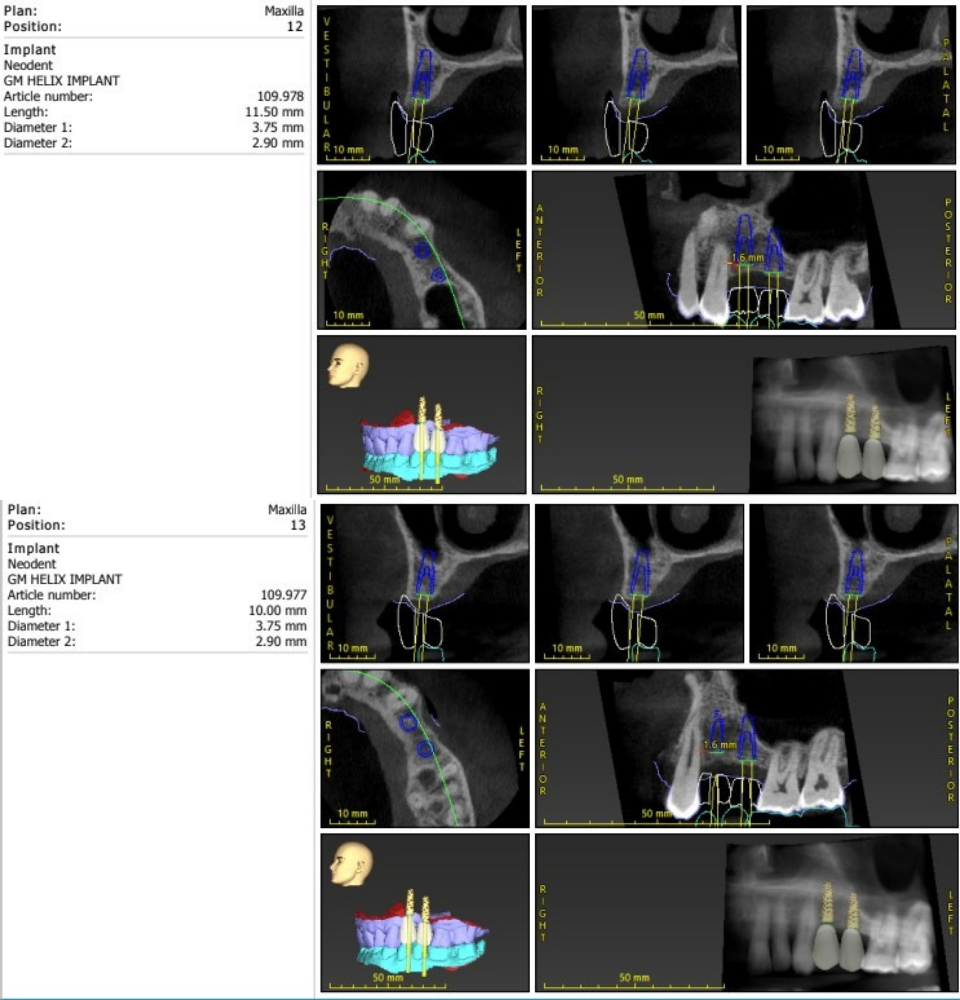
Clinically, fracture patterns like that change the entire horizon of the case. We discussed restorative options as we should, but deep down we knew the truth. Predictability was compromised. The prognosis was no longer stable. The patient ultimately needed two implants, and the surgical phase went well.
But what mattered most did not happen during surgery.
It happened afterward, during implant treatment planning.
The Highest Emotional Point Isn't Surgery
Dentists often think the hardest part of an implant case is the procedure. But many patients experience the opposite. The highest emotional point is the decision-making phase. It is the moment they realize they have to choose a path that is expensive, irreversible, and tied to their sense of future safety. After a traumatic fracture event, patients begin asking questions that they often do not speak out loud.
- What if I break something again?
- What if I choose the wrong option?
- What if there was a better option I was not told about?
- What if this becomes a pattern?
This is where dentistry wins or loses trust.
Because patients do not experience nuance the way clinicians do. When we speak in clinical language and compress complex decision-making into a quick recommendation, we think we are helping. But to the patient, it can feel like being pushed down a road they do not understand. And when a patient does not understand the road, they fill the gaps with fear.
The Decision Point: Splinted vs Individual Implant Crowns
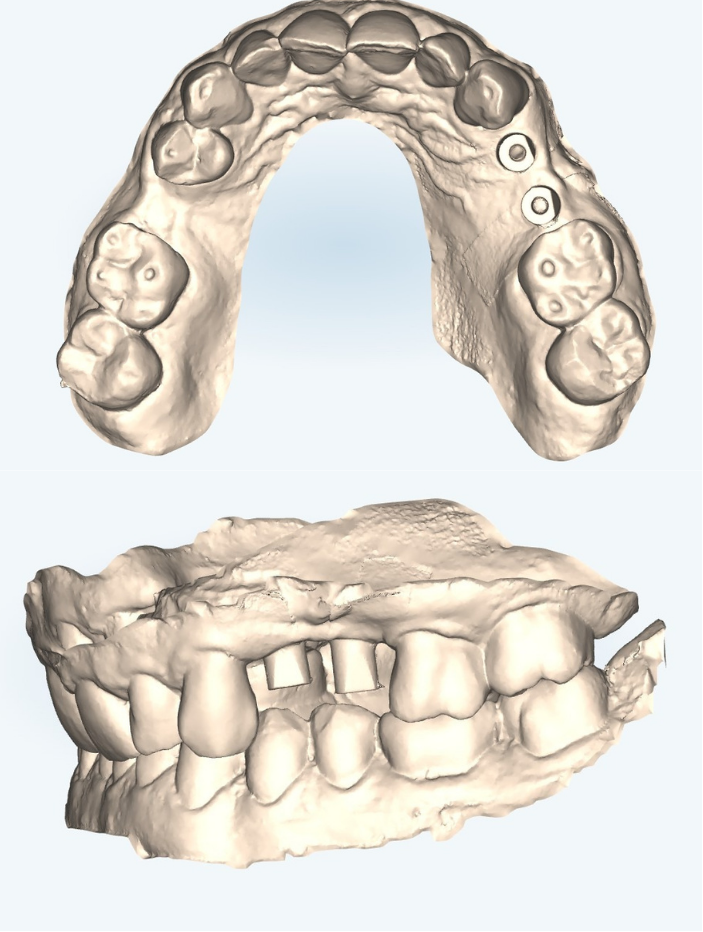
In this case, once the implants were placed, we reached a decision point that every implant dentist recognizes: do we restore these implants as two individual crowns, or do we splint the crowns together? For clinicians, this is a nuanced conversation with valid options on both sides. For patients, it feels like a life decision disguised as a dental decision.
Why There's Rarely One Perfect Answer
The reality is there is rarely one perfect answer. The right answer depends on risk analysis.
- Occlusion matters
- Parafunction matters
- Fracture history matters
- Oral hygiene matters
- Patient compliance matters
- The ability to commit to long-term protection matters
Yet patients are not trained to think in risk analysis. They are trained to look for certainty. They want to know which option is safer, which lasts longer, and which reduces the chance they go through this trauma again.
The Problem with Being Decisive
At this stage, many clinicians try to overcome patient anxiety by being decisive. They present one option confidently and move forward. But confidence is not what builds trust.
Clarity builds trust.
So instead of steering the patient down a road, I wanted him to understand the road. We had intentionally placed the implants parallel, not because it looks pleasing on a scan, but because it preserved optionality. It kept both restorative pathways viable.
The Turning Point: Making Clinical Reasoning Visible with AI
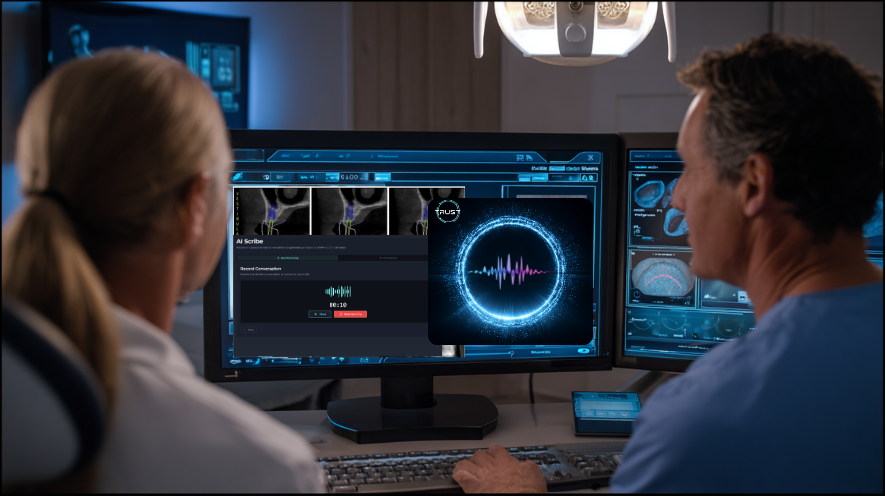
At the final impression appointment, we brought Isaac, Trust AI, into the conversation live. Not to replace my thinking. Not to impress the patient. Not to outsource judgement. But to make critical thinking visible. We asked Isaac to walk us through the pros and cons of splinted versus individual implant crowns in real time with the patient present.
Isaac AI Audio Explanation
Clinical reasoning walkthrough
The tone of the appointment immediately shifted. It stopped feeling like persuasion and became education.
Instead of the patient wondering if I was biased, he could see the decision framework unfold. Instead of wondering whether something was being hidden, he saw transparent reasoning. He saw that dentistry is not always a perfect answer. Often, it is a best-fit answer situation based on risk. He saw that we were thinking deeply, weighing variables, and planning for the future rather than rushing toward a quick finish.
What Changed in the Room
This is the value of AI in dentistry that most people are missing. AI is not only a diagnostic tool. It is a communication tool. It helps clinicians create structured conversations, cover the key variables clearly, and present tradeoffs without overwhelming the patient. It helps turn complexity into clarity.
Patients do not fear complexity. Patients fear confusion. And confusion comes from hidden reasoning.
That is why AI has the potential to become one of the most powerful tools for case acceptance and compliance. When patients can see your thinking, they stop guessing. When they stop guessing, fear decreases. When fear decreases, trust increases.
The Real Win: Ownership
In this case, after seeing the tradeoffs explained transparently, the patient chose to splint the crowns. But the real win was not the choice itself. The real win was ownership. He understood why hygiene mattered. He understood why his history mattered. He understood why splinting was not a "free win" but a strategic decision that needed protection. And most importantly, he understood that a night guard was not optional.
Not because I told him but because the reasoning made it obvious.
That is what informed consent should look like in modern dentistry. Not signing a form. Understanding a system. When patients understand the system, they protect the investment. Compliance stops being a struggle and becomes their choice.
Why AI is a Communication Tool, Not Just a Diagnostic Tool
When people talk about AI in dentistry, the conversation usually jumps to radiographs and diagnosis. Can it read caries? Can it detect pathology? Can it analyze perio? Those are valuable discussions. But they overlook the most universal problem in dentistry, the one that touches every single practice no matter what specialty.
Communication.
DEFINITION: What is AI-assisted patient communication in dentistry?
AI-assisted patient communication uses artificial intelligence to make clinical decision-making transparent and understandable to patients in real-time. It transforms complex dental concepts into clear educational conversations, helping patients understand not just what treatment they need, but why—and what tradeoffs are involved in different options.
This is where Trust AI is different. We are not building another bolt-on feature. We are building Isaac Practice OS to support dentistry at the level where practices actually struggle: decision-making, workflow, documentation, and patient understanding. DSOs have teams of administrators, systems, and infrastructure. Private practices deserve the same leverage. Isaac is how we level the playing field, not by making dentistry colder, but by making dentistry clearer.
The Future of Dentistry: Teaching, Not Just Treating
The clinicians who win over the next decade will not be the ones with the most technology. They will be the ones who can teach. The practices that grow will be the practices that build trust efficiently. And trust is built when patients can see the reasoning, not just hear the conclusion.
AI does not take the dentist out of dentistry.
It puts the teacher back into the dentist.
About the Author
Dr. Divian Narendra Patel, DDS, BDS
Chief Clinical Officer, Co-Founder
Dr. Patel practices at San Ramon Dental Excellence in California, specializing in conservative, ethical dentistry. His expertise spans invisible orthodontics, restorative, cosmetic, and implant dentistry, with a focus on delivering healthy, functional, and aesthetically pleasing results that prioritize patient well-being. He is the Chief Clinical Officer and co-founder of Trust AI. Connect with him on LinkedIn.
Ready to Transform Patient Communication in Your Practice?
The future of dentistry isn't just about better technology—it's about better teaching. When patients understand the "why" behind their treatment, case acceptance improves, compliance increases, and trust deepens.
Try Isaac to experience transparent case presentation in action.
Get Started with Isaac HereRelated Articles
Malpractice Prevention Should Be Designed Into the Practice

AI is Changing What Makes a Dental Practice Valuable