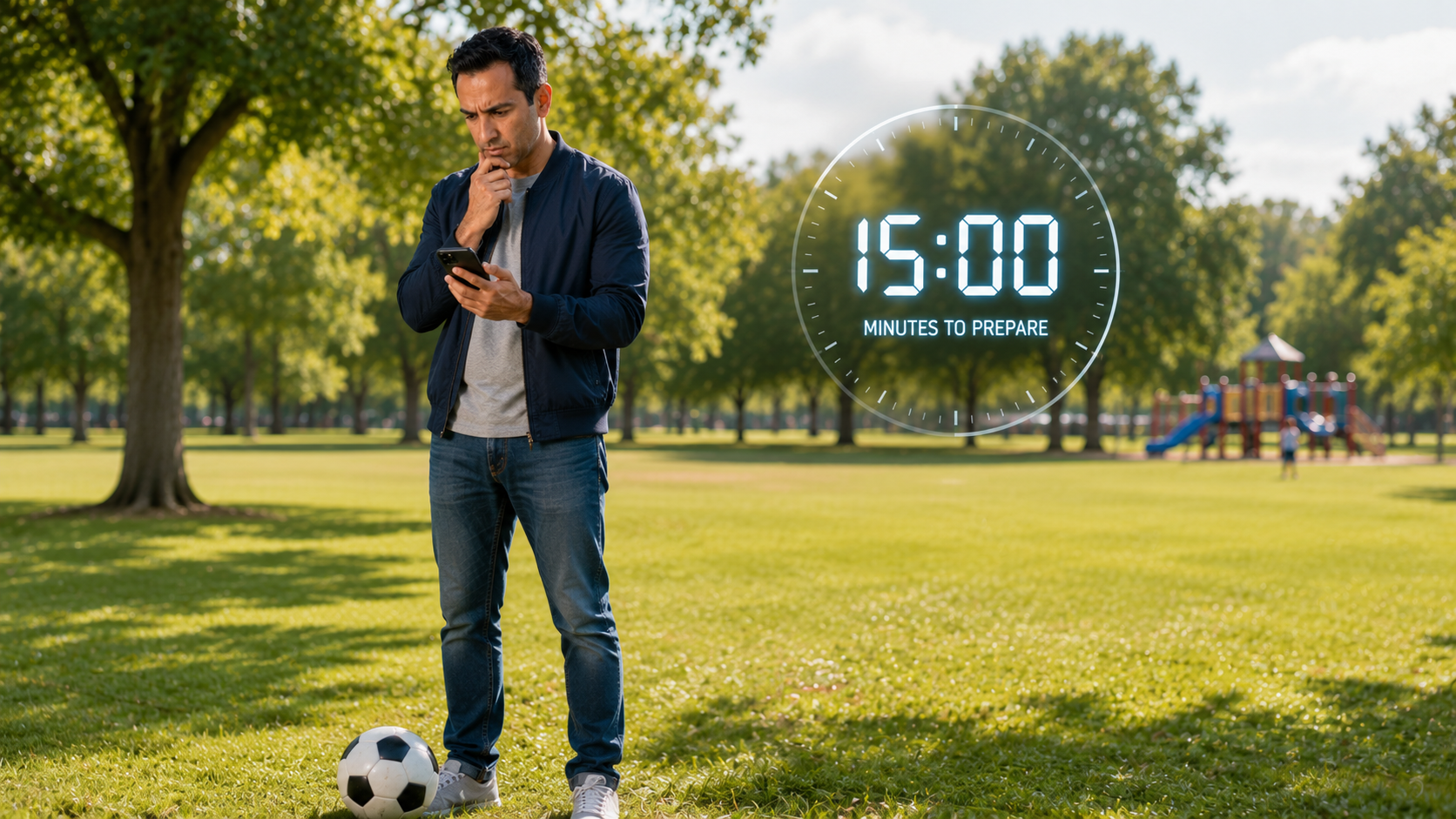
Fifteen Minutes to Prepare: How Isaac Helped Me Face a Child's Dental Emergency
A dentist's account of using Isaac, Clinical Intelligence, to prepare for a pediatric dental trauma emergency, and why those fifteen minutes changed everything.
A Frantic Saturday Morning Text
A Saturday morning text from an old friend upended my plans in an instant. I was in the middle of family commitments when she sent a photo of her six-year-old son, who had been hit in the mouth by a ball during a hockey game. There was blood, what looked like broken teeth, and a mother too frightened to look closely enough to know how bad it really was.
I don't normally treat children in my practice, and it had been a while since I'd managed a serious dental injury in a young child. But when a friend calls asking for emergency care for her son, there's only one answer.
"Bring him in."
Within minutes, I was getting ready to head to the clinic.
Racing to the Clinic With Too Many Unknowns
Dental trauma itself was familiar territory, but I knew I wasn't fully current on the latest evidence-based protocols for more severe injuries in young children. This wasn't a situation where I wanted to rely on memory alone. I wanted to make sure my thinking reflected the latest evidence-based recommendations.
The photo she'd sent was far from clear, but it gave me a few clues. One central incisor looked displaced, the adjacent lateral incisor appeared fractured, and there was clear soft-tissue injury, with blood obscuring much of the area.
Preparing for the Worst Case With Isaac
As I gathered my things, my mind was already racing through the possibilities. So I turned to Isaac, the clinical intelligence now trusted by nearly 10,000 dental practitioners.
I used the conversation to prepare myself for what I might find when the boy arrived. Isaac helped me work through the main possibilities and, just as importantly, the worst-case scenarios I needed to be ready for:
- A severely displaced or completely avulsed tooth, where knowing immediately whether it was primary or permanent would dictate what should and shouldn't be done.
- A deeper fracture with pulpal involvement, requiring prompt assessment and treatment to preserve pulp vitality and protect the tooth's long-term prognosis.
- A root or bone fracture, which might not show up in a photo but could completely change how the teeth needed to be stabilized and monitored.
- Injury to the developing permanent teeth, a critical concern in a six-year-old if any of the traumatized teeth were still primary.
- More extensive soft-tissue trauma, including the possibility that fragments of broken tooth were embedded in the lip or surrounding tissue.
That short exchange changed how I approached the entire emergency. Instead of trying to mentally retrieve everything I'd ever learned about pediatric dental trauma, I could think systematically: what to assess, which radiographs I might need, what treatment options to consider, and what would call for referral.
By the time I arrived at the clinic, I had a clear plan.
It also sharpened something very practical: my patient was six, frightened, likely in pain, and not going to tolerate a long appointment. I needed the exam and treatment to be as focused and efficient as possible, and knowing exactly what I was looking for meant I could prioritize what mattered most.
A Co-Pilot for Pediatric Dental Trauma
The value of having a co-pilot like Isaac was obvious to me that morning. The precision of that conversation was remarkable. In those fifteen minutes, I went from questioning whether my knowledge was current enough for this particular emergency to feeling genuinely prepared to assess the child calmly and give him the best possible care.
That same kind of rapid, Isaac-powered clinical decision-making recently helped Dr. Ankur J. Khanna earn first place at the AAID Annual Conference Table Clinic competition, where he generated and stress-tested complete treatment strategies in real time for a complex implant case.
The Diagnosis: Calm After the Storm
Once he was in the chair, the clinical exam and X-rays largely confirmed what I'd suspected from the photo: the central incisor was displaced but still in its socket, and the adjacent lateral incisor had a crown fracture. The radiograph showed no root or alveolar bone fracture, and the surrounding structures were intact.
Reality, thankfully, was less dramatic than some of the scenarios I'd prepared for. But that was exactly the point.
Isaac hadn't told me what was wrong. It had helped me arrive ready for whatever it turned out to be.
Why Isaac Gives Dentists Time to Think
That, to me, is one of the most valuable ways Isaac can support a clinician: it gives us something we're often desperately short of: time to think before we have to act.
What a time to practice dentistry, when staying current no longer has to mean trying to carry an entire library of knowledge in our heads. We can have the right knowledge available when we need it, while the clinical judgment and responsibility remain where they belong: with the dentist.
That Saturday, fifteen minutes made all the difference.
About the Author
Dr. Shervin Molayem is Chief Innovation Officer and Co-Founder of Trust AI. A periodontist and AI pioneer with 15 years of clinical experience, he filed the first patent in dental multimodal AI and introduced the first AI-powered periodontal probe (LuminX). He was among the first researchers globally to establish the Mouth-COVID connection and serves on the Innovation Committee at DAIA (Dental AI International Association). His work advances oral-systemic health through evidence-based technology.
Related Articles
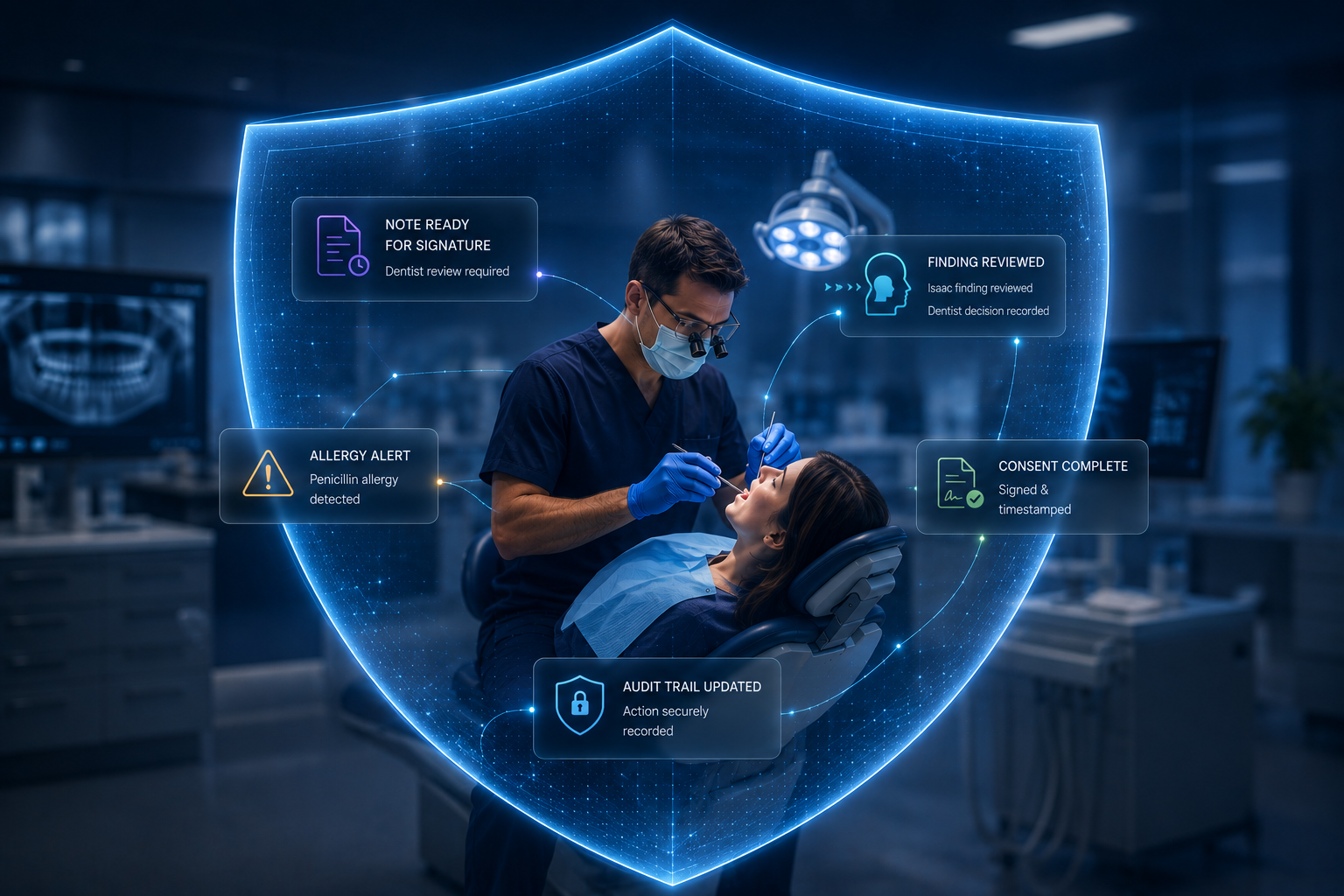
Malpractice Prevention Should Be Designed Into the Practice

AI is Changing What Makes a Dental Practice Valuable