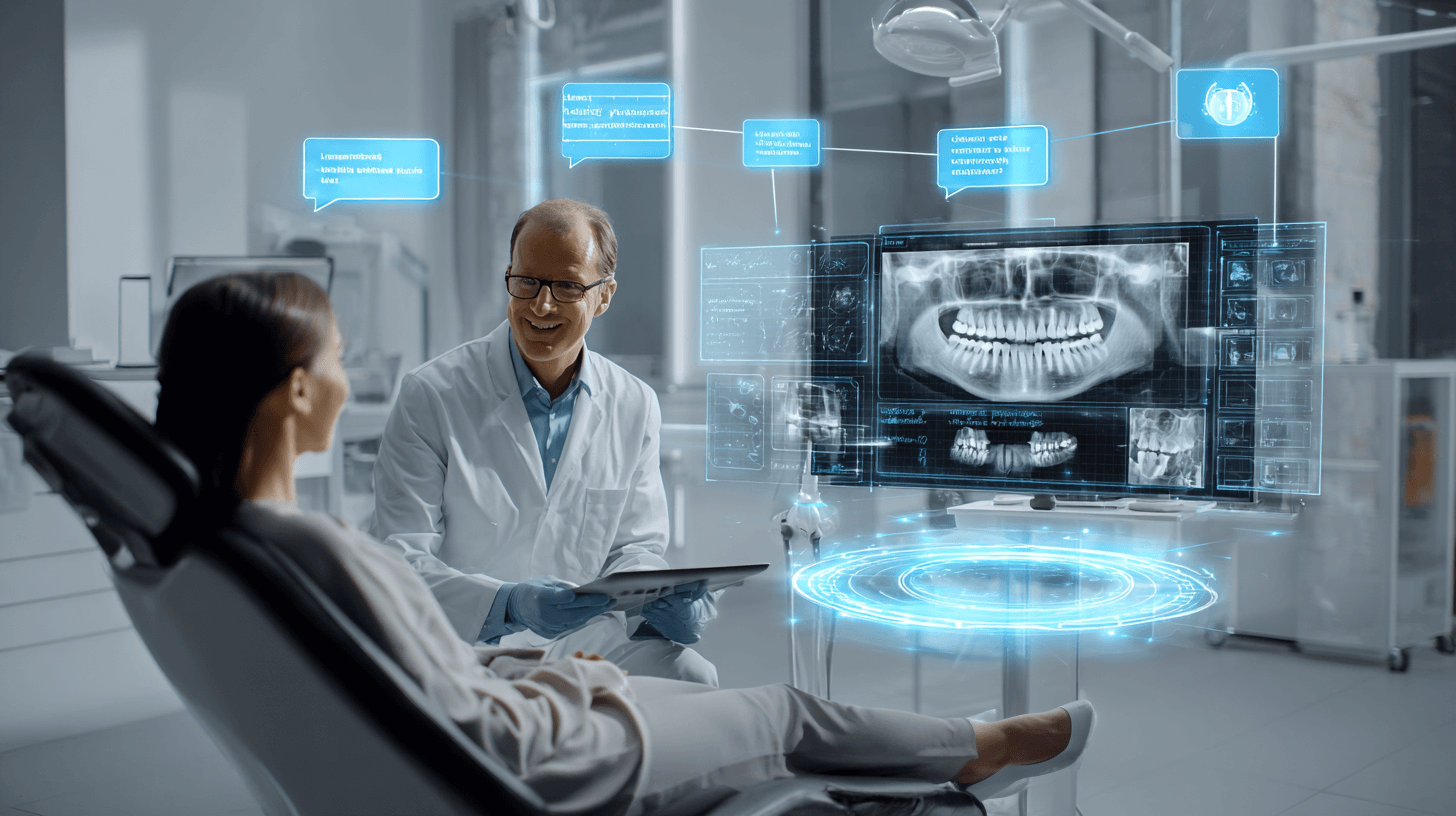
The Future of Dentistry: AI as a Clinical Partner, Not a Replacement
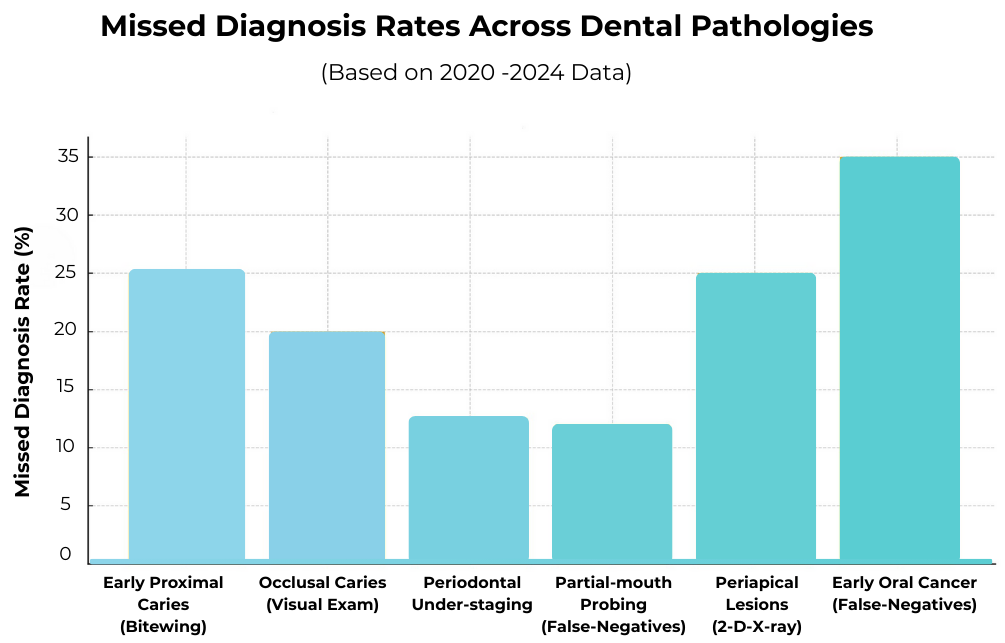
Studies show that 20–40% of early dental pathologies go undetected in routine exams—including approximately 25% of periapical lesions and up to 30% of early caries.
Let's be honest. The word AI still makes many dentists uneasy.
For some, it feels like a threat to years of training and experience, as if a machine could replace what we've spent a lifetime learning. That reaction is understandable. Most of us in dentistry don't love sudden change. But ignoring AI won't make it disappear. It's already transforming healthcare, education, and daily life.
Dentistry has always evolved through technology. From the first radiographs to digital scanners and guided surgery, every innovation faced doubt before it became routine. AI is simply the next step. Instead of resisting it, we can learn to use it wisely and responsibly, for the good of both clinicians and patients.
From Assistance to Partnership: How Clinical Intelligence Enhances Care
Over the years, dental technology has helped us see more, plan better, and work faster. AI-powered clinical intelligence is different. It's not just another tool. It's more like having a second set of eyes and a sharper memory. It can recognize patterns we might overlook, giving us extra clarity when we need it most.
Still, this new kind of intelligence raises questions. Many clinicians wonder, "If AI can analyze and plan, what does that mean for my role?"
The answer is simple. Clinical intelligence cannot replace the human side of dentistry. Our intuition, empathy, and ability to understand what a patient is feeling remain irreplaceable. What it can do is take on the repetitive or uncertain parts of our work—the pattern recognition, the comparison to thousands of similar cases, the flagging of subtle changes that might escape even experienced eyes.
The dentist remains the one who interprets, decides, and guides care. AI provides the clinical support and data. Think of it as a reliable clinical partner that helps you catch small details, confirm what you already suspect, and give you confidence in your clinical choices.
Let me share a small personal moment. A few years ago, I reviewed a full-mouth rehab case late at night after a long day. My eyes were tired, my mind cluttered. I stared at one small radiolucency for far too long, asking myself a question most dentists know too well: "Is this something, or am I overthinking it?"
At that moment, I wished I had a second set of eyes. Someone—or something—that could provide clinical intelligence and say with certainty, "Here's what the data shows." Not to make the decision for me, but to give me the confidence to trust my clinical judgment.
That moment is one of the many reasons I believe AI can hold us steady when the work gets heavy.
Why Clinical Intelligence Is the Evolution Dentistry Needs
Dentistry has always relied on skill and judgment, so it makes sense that some are hesitant about AI. But resisting clinical intelligence today is like resisting radiographs a century ago. Once they were new and intimidating, but now we can't imagine practicing without them.
Consider digital radiography: In 2005, only about 15% of U.S. dental practices used digital X-ray systems. Many dentists were comfortable with film and saw no reason to change. Yet by 2015, that figure had risen to approximately 78% as the advantages became undeniable. What once seemed unnecessary became the standard of care.
AI-powered clinical intelligence is following the same path. Once you see how consistent and precise it can be, it becomes hard to go back.
Clinical Intelligence Builds Confidence, Not Competition
With intelligent clinical systems like Trust Dental AI, diagnosis and patient management become more precise and less stressful. Clinical intelligence helps spot subtle changes such as tiny bone patterns, early lesions, or shifts in soft tissue that might otherwise go unnoticed. It's about finding problems early, before they become irreversible. That kind of clarity helps you make stronger decisions and builds more trust with your patients.
For a deeper exploration of how AI-native systems are transforming modern practice, listen to our conversation with Dr. Simone Stori on Designing the Digitally Human Practice.
Here's how that plays out in real practice:
A Case in Early Detection: Saving a Natural Tooth
A 52-year-old male came for a routine check-up. I uploaded the periapical radiographs to Trust AI image analysis and continued the clinical examination, noting nothing unusual or painful.
Within a minute, Trust AI flagged an area needing closer evaluation on the distal root of tooth #36, which showed a faint radiolucency. Tooth #36 had an old MOD composite filling. CBCT images revealed a micro-fracture in the old restoration and confirmed the early periapical lesion. Vitality testing showed a lingering response to cold, suggesting irreversible pulpitis. Because it was caught early, the tooth was treated conservatively with endodontic therapy and a crown, avoiding future extraction and implant placement.
Outcome:
- ✦The lesion resolved within six months
- ✦The patient retained his natural tooth
- ✦Treatment was less costly than replacement therapy
When I explained that Trust AI image analysis helped detect something I could have missed, the patient said: "I'm relieved. I had no idea anything was wrong. This probably saved me from a much bigger problem."
This case showed me that, by pointing out incipient pathology, AI was subtly changing how I practiced. I found myself paying closer attention, taking a second look at the quiet teeth that patients never complain about. No matter how experienced we are, having a co-pilot can make all the difference.
It also eases the mental load that comes with high-stakes dentistry. The worry of "What if I missed something?" starts to fade. You can approach complex cases with more calm and confidence, knowing you have a dependable clinical partner beside you. Every dentist faces the "save or extract" decision—a topic we explore in depth in our article on how AI and human pattern recognition converge in clinical decision-making.
Early adopters are experiencing tangible clinical benefits when integrating AI into their practices. As one general dentist put it, "AI has become my partner, catching early changes I used to only notice in hindsight." A restorative dentist noted, "What surprised me most is the confidence. I'm diagnosing earlier, treating earlier, and my patients are enjoying the transparency."
Getting Started: What You Need to Know
Cost? Right now, Trust AI's Clinical Intelligence, Isaac is free to use. There's no financial barrier to trying it and seeing the value for yourself.
Time and learning curve? It's very intuitive. Most dentists feel comfortable after using it once.
Integration? No major setup. Isaac, Trust AI's clinical intelligence partner, is available 24/7 via web portal, WhatsApp, and voice chat. For added convenience, iOS (iPhone) users can download the mobile app.
Data privacy? Top priority. Trust AI uses healthcare-grade security, so your patient data stays protected and private.
The Path Forward
The dental profession stands at a turning point. Patient expectations continue to rise, cases grow more complex, and the volume of clinical decisions we make each day increases. Yet we're all searching for ways to practice more sustainably—to deliver excellent care while reducing the burden of decision fatigue and diagnostic uncertainty.
Clinical intelligence doesn't ask us to work harder. It helps us work smarter, with more confidence and less stress.
The smartest dentists of tomorrow won't be the ones who fear being replaced by AI—they'll be the ones who know how to use it wisely to save time and energy, helping ease the pressure of a profession that is both beautiful and demanding.
What path will you choose?
References
- Schwendicke F, et al. "Artificial intelligence in dental research: Checklist for authors, reviewers, readers." Journal of Dentistry. 2023. Available at: https://pmc.ncbi.nlm.nih.gov/articles/PMC10742918/
- Hung K, et al. "The use and performance of artificial intelligence applications in dental and maxillofacial radiology: A systematic review." Dentomaxillofacial Radiology. 2023. Available at: https://pmc.ncbi.nlm.nih.gov/articles/PMC10056324/
- American Dental Association. "Survey of Dental Practice: Technology Use in Dental Practice." 2015.
About the Author
Dr. Shervin Molayem is Chief Innovation Officer and Co-Founder of Trust AI. A periodontist and AI pioneer with 15 years of clinical experience, he filed the first patent in dental multimodal AI and introduced the first AI-powered periodontal probe (LuminX). He was among the first researchers globally to establish the Mouth-COVID connection and serves on the Innovation Committee at DAIA (Dental AI International Association). His work advances oral-systemic health through evidence-based technology.
Isaac PracticeOS, our AI-Native PMS is here!
Powered by Isaac OneHealth Ultra AI core engine.
Admin burden declines. Clinical time increases. Focus returns to patients.
Related Articles
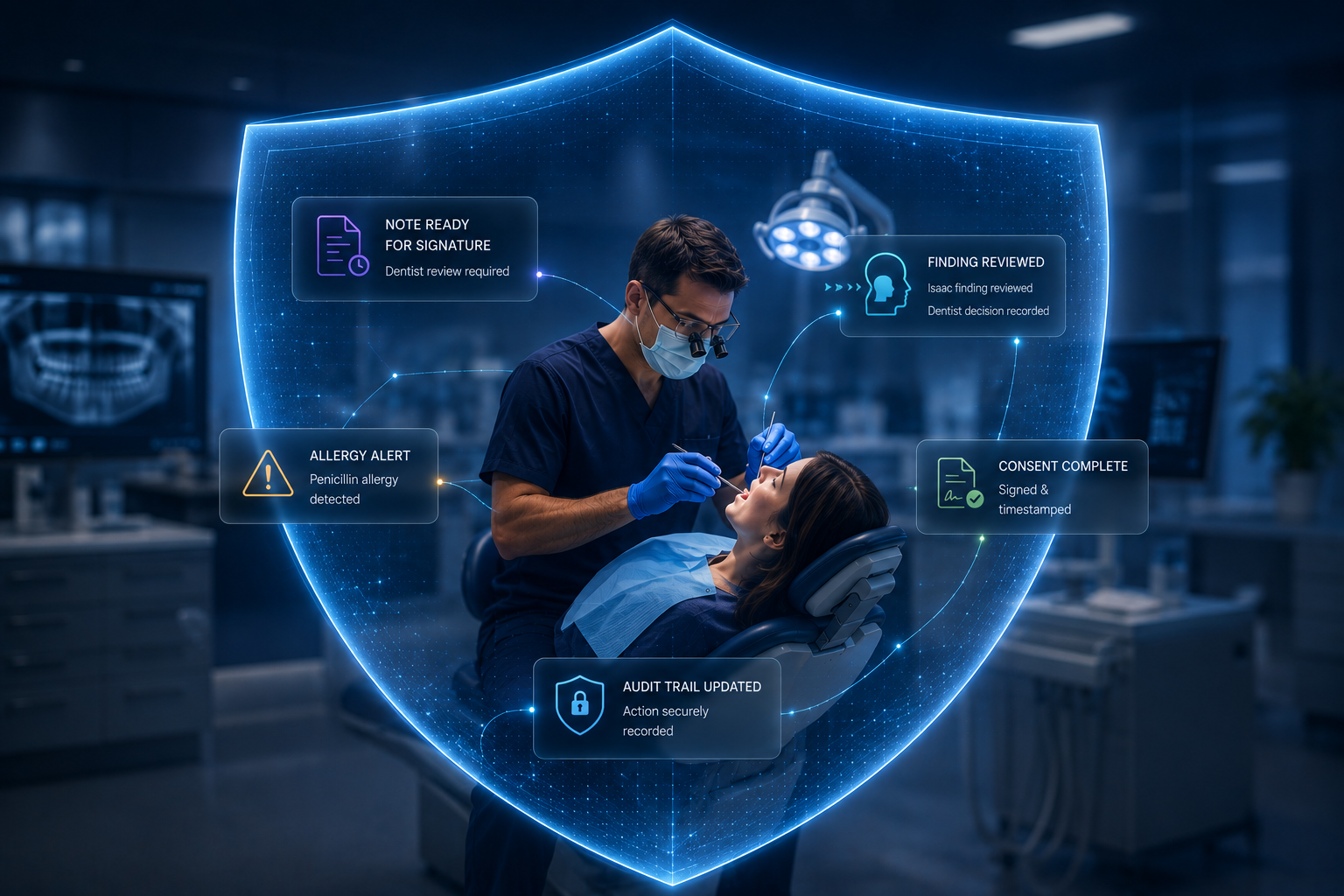
Malpractice Prevention Should Be Designed Into the Practice

AI is Changing What Makes a Dental Practice Valuable