AI-Native Dentistry: The AAID Award That Changed Everything
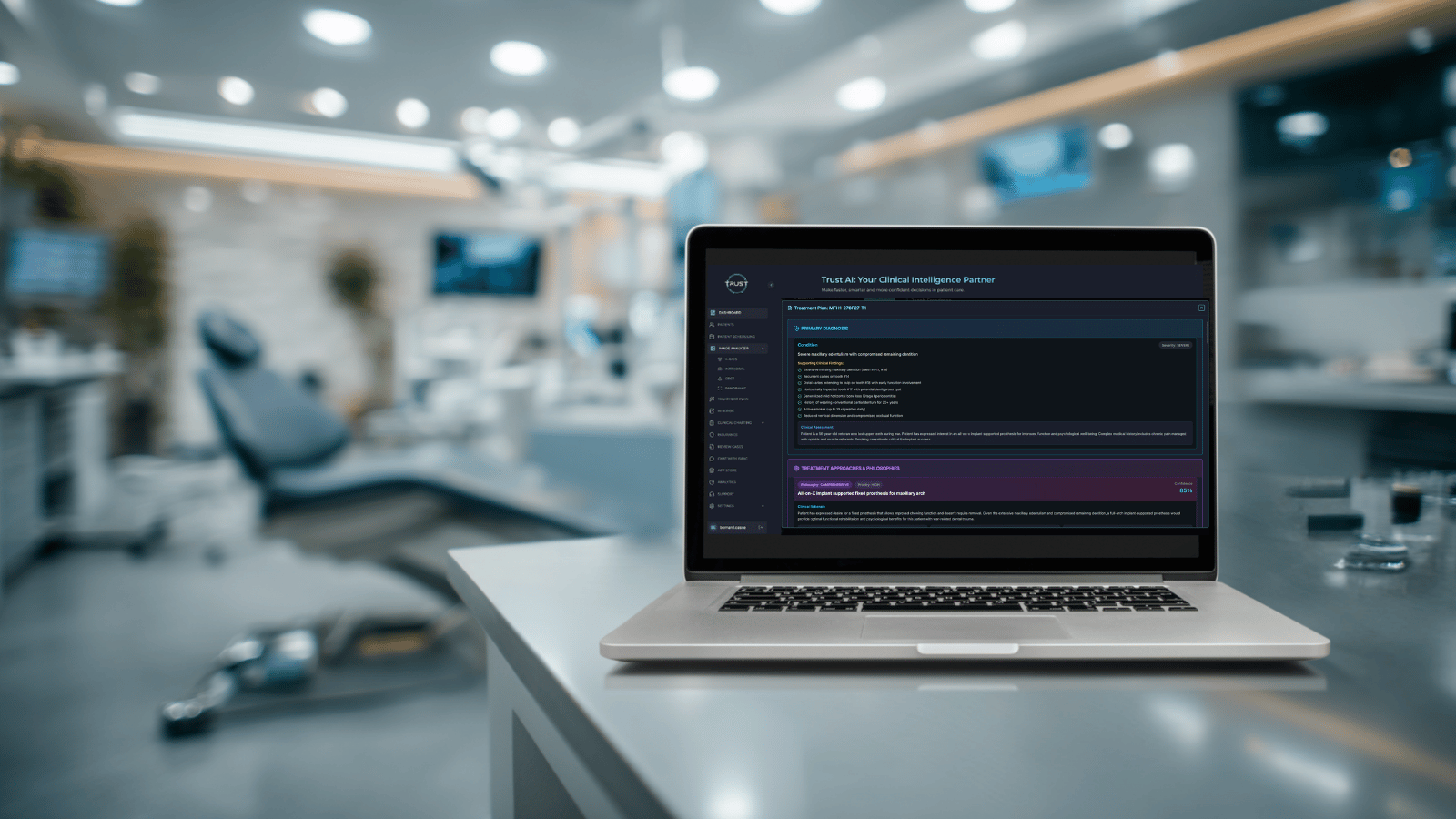
Within two minutes, Isaac—the AI brain behind Trust AI's new practice management system—analyzed 20+ years of military trauma, chronic pain records, and full-mouth radiographs. Then it generated a comprehensive implant treatment plan that won first place at the American Academy of Implant Dentistry.
Watch the award-winning presentation →
When Dr. Ankur J. Khanna presented Jacob Freedman's case at AAID Table Clinics, experienced clinicians stopped mid-conversation. Students crowded closer. Judges returned for a second look.
This was more than an award-winning case presentation. It was the first public demonstration of AI-native clinical intelligence—and dentists recognized immediately that something fundamental had shifted.
The Patient No Template Could Handle
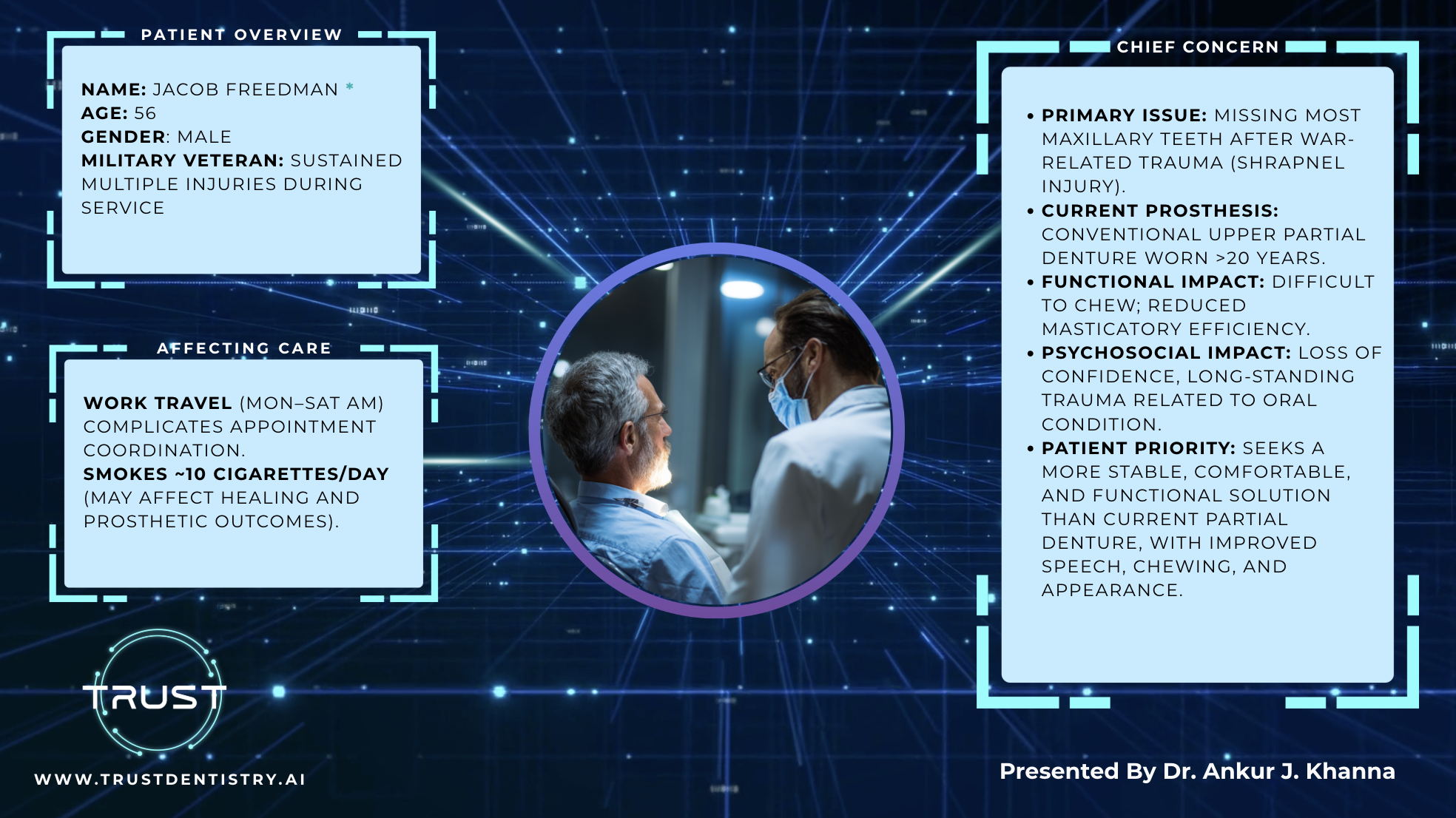
Jacob is a 56-year-old military veteran whose chart reads like a medical thriller. Gunshot wound to the leg. Shattered heel. Multiple shoulder surgeries. Nerve damage radiating into both arms. Years of chronic pain management with Norco, Xanax, and cyclobenzaprine. Ten cigarettes daily. Travel schedule Monday through Saturday.
A shrapnel injury left him missing most maxillary teeth for over twenty years. He'd worn a failing partial denture, struggled with speech clarity, and dealt with the psychosocial burden of visible tooth loss.
He wanted stability. Function. Dignity.
Traditional implant planning software would see the radiograph. Isaac saw everything else.
The Moment That Stopped the Room
Dr. Khanna showed a video recording of Isaac analyzing Jacob's case in real-time.
What happened on screen is what made clinicians lean forward:
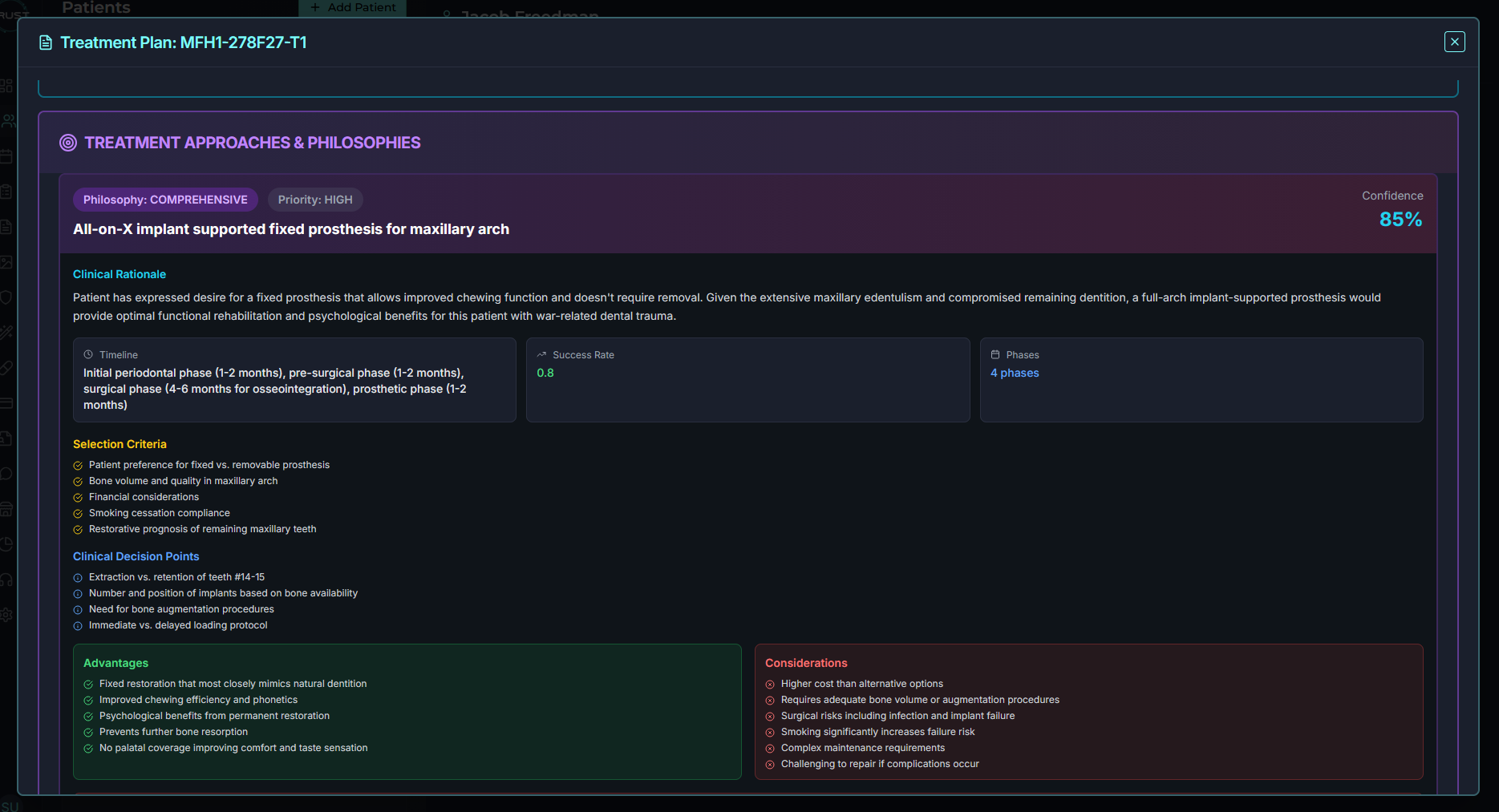
Isaac did more than process data. It connected the trauma history with current prosthetic instability. It recognized tobacco-related healing risks in context with chronic pain management. It processed the travel constraints that would affect surgical timing. It organized medical complexity, functional limitations, and psychosocial factors into structured treatment pathways—each with clear rationale.
The treatment plan report was thorough. The prosthetic considerations were comprehensive. The surgical sequencing accounted for real-world healing limitations.
And it presented all of this in conversational language a patient could understand.
This is what dental AI was supposed to be. Not a measurement tool. Not a detection algorithm. But a clinical intelligence that thinks the way dentists actually think—just faster, more complete, and infinitely patient.
Why This Is Bigger Than Implants
Isaac isn't implant software. It's the reasoning engine behind Trust AI's practice management system—launching this month.
The same intelligence that organized Jacob's complex implant case can:
- ✦Review a pediatric patient's caries risk from diet, hygiene, and family history
- ✦Coordinate ortho treatment planning with growth patterns and compliance factors
- ✦Generate hygiene protocols adjusted for medical conditions and medications
- ✦Structure perio maintenance around systemic health markers
- ✦Draft treatment notes that capture clinical reasoning, not just procedures
Every specialty. Every procedure. Every conversation.
The PMS does more than store clinical information—it understands it. That's the distinction between legacy software and AI-native architecture.
What Dentists Actually Saw
The AAID presentation showed the complete workflow:
Pre-surgical planning: Isaac reviewed Jacob's medical history, identified contraindications, suggested medication timing adjustments, and outlined healing considerations specific to his smoking and pain management.
Treatment sequencing: Multiple pathway options with prosthetic implications, healing timelines, and patient lifestyle factors already integrated.
Interactive refinement: Dr. Khanna challenged Isaac's recommendations—questioning protocol choices, exploring risk-benefit tradeoffs, testing alternative approaches. Isaac responded with clinical reasoning, adjusted plans based on the questions, and provided complete clarity before any surgical decision was made. This wasn't a static report. It was a clinical conversation.
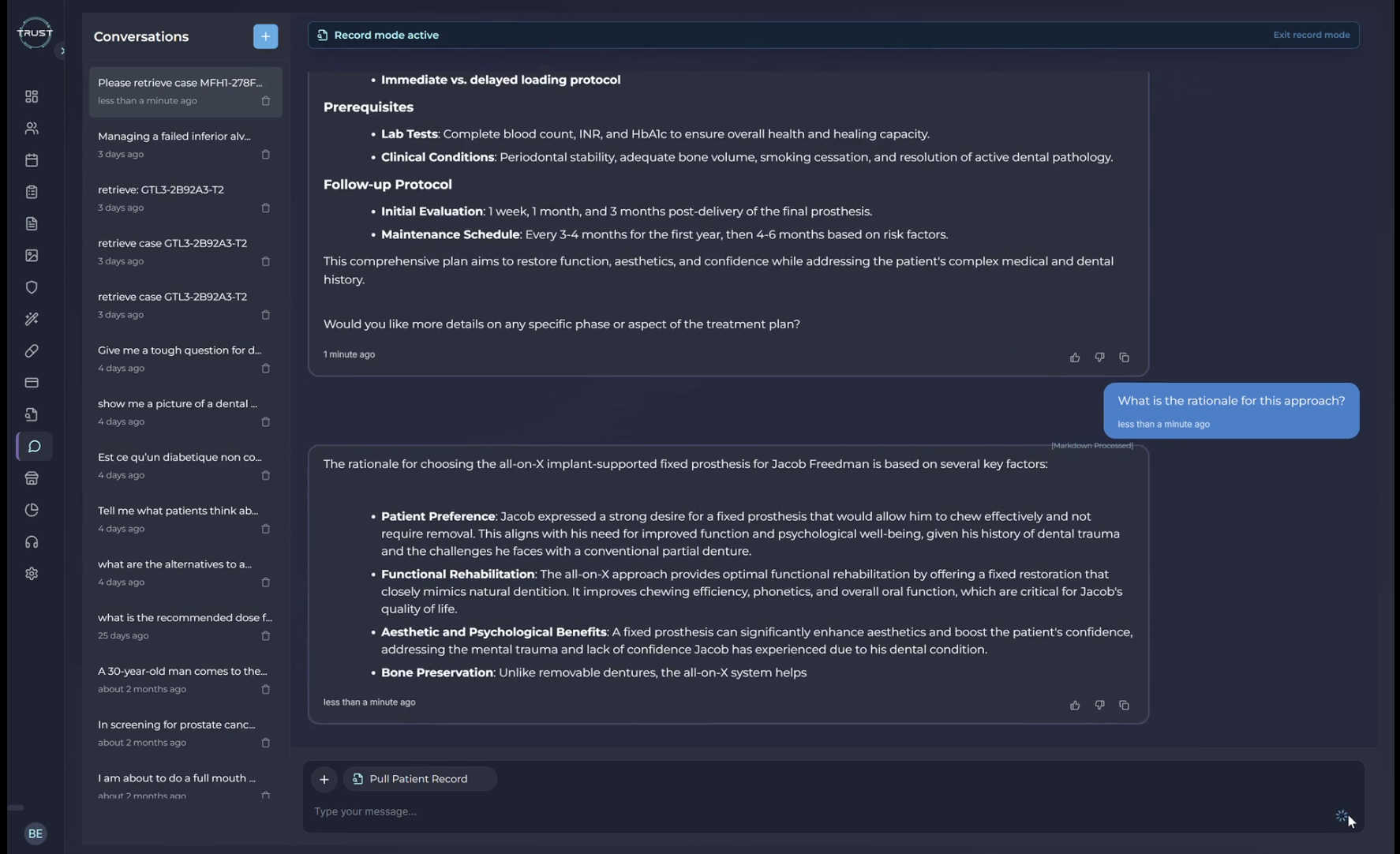
Patient communication: Clear explanations of why certain approaches made sense for his specific situation—not generic implant education.
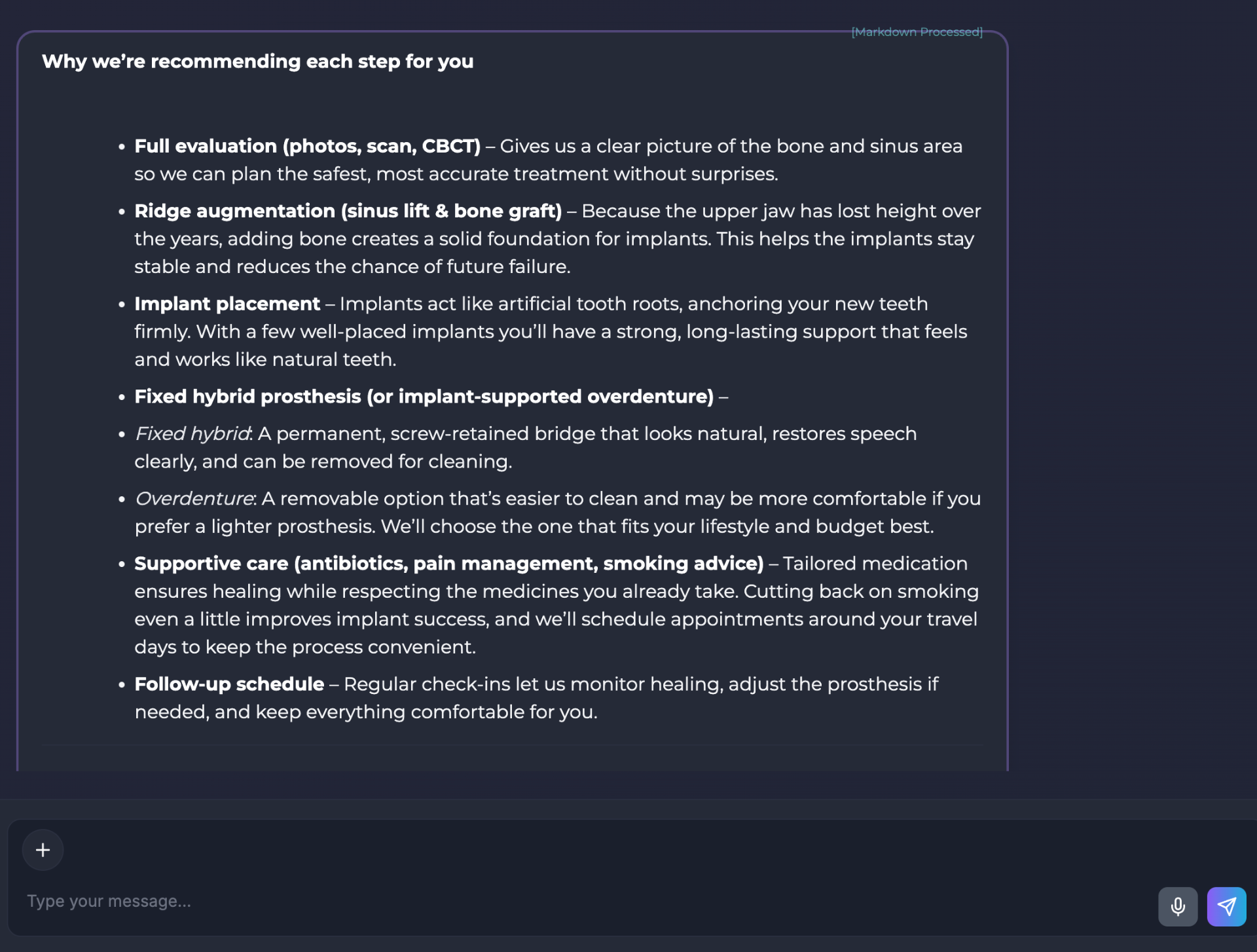
Post-operative monitoring: Structured follow-up adapted to his travel schedule and healing risks.
Dr. Khanna didn't replace his clinical judgment. He amplified it. Isaac organized the complexity so the dentist could focus on decision-making, patient rapport, and execution.
The Questions That Followed
After the presentation, clinicians surrounded the table:
"When can we get this?"
"Does it integrate with our imaging?"
"Can it handle perio cases this way?"
"What about pediatrics?"
The answer: This month. Trust AI's PMS—powered by Isaac—launches soon. And unlike bolt-on AI tools, this is native intelligence. Every chart. Every note. Every treatment plan. Connected by an AI that actually understands dentistry.
For dentists who want to use Isaac's clinical intelligence now, it's already available as a standalone chatbot while the full PMS rolls out.
Why AAID Judges Gave It First Place
Great case presentations show technical skill. Award-winning presentations show something deeper: a better way of thinking.
Jacob's case demonstrated:
- ✦Completeness: Every relevant factor visible and organized
- ✦Clarity: Complex decision-making made transparent
- ✦Reproducibility: A workflow other clinicians could adopt
- ✦Patient-centeredness: Planning built around his specific needs, not protocol templates
The judges understood they were looking at more than a well-executed implant case. They saw a new standard for clinical documentation and treatment planning. One where AI handles information synthesis so dentists can focus on care.
The Transformation
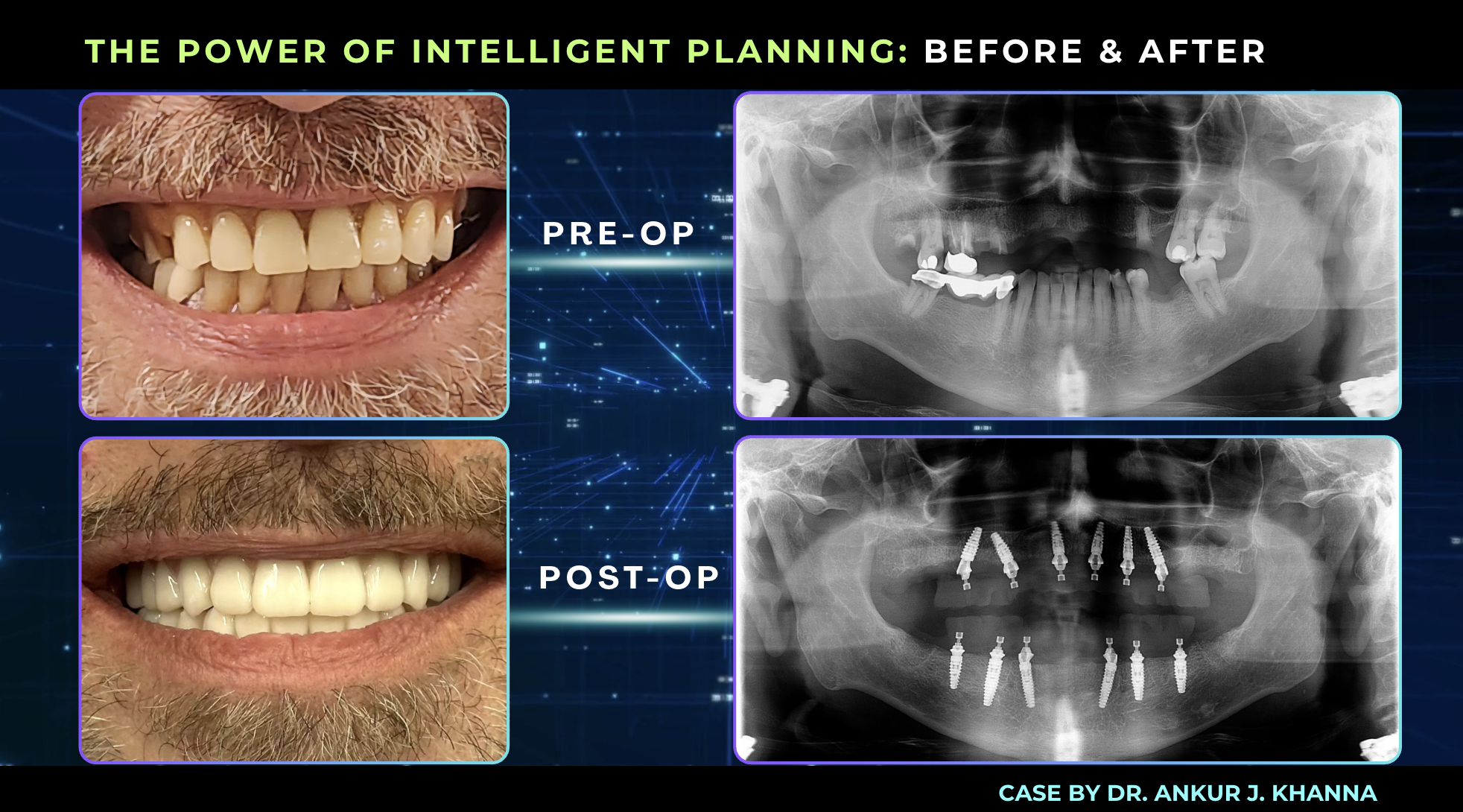
Jacob's before-and-after tells the story the radiographs can't: restored function, stable prosthetics, clear speech, rebuilt confidence.
But the deeper transformation happened in the planning phase. When every complexity—medical, functional, emotional, anatomical—stood organized in one place, the surgery and restoration became predictable. Patient-centered. Precise.
That's what AI-native dentistry makes possible.
What Comes Next
Dr. Khanna's first-place award transcended recognition of excellent clinical work. It was validation of a fundamentally different approach to practice management.
Dentistry has spent decades adapting to software built for billing and scheduling—systems that treat clinical intelligence as an afterthought. Isaac inverts that model. The AI understands dentistry first. Everything else serves that understanding.
The full PMS launches this month. Isaac is available now.
And it already has an AAID first-place award to prove it works.
Ready to see Isaac in action?
Explore the clinical intelligence that's changing implant dentistry—and every other specialty along with it.
Related Articles
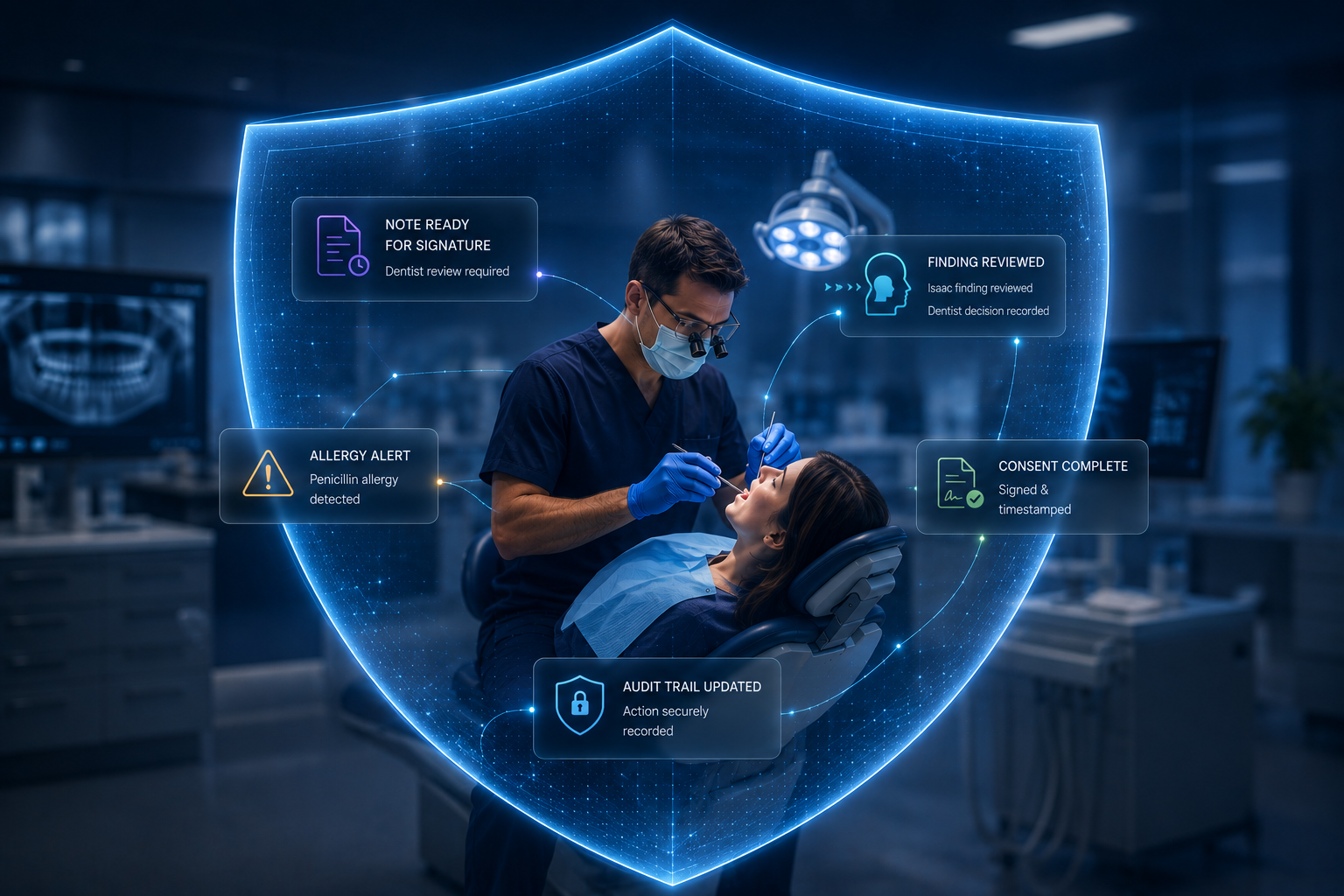
Malpractice Prevention Should Be Designed Into the Practice
AI is Changing What Makes a Dental Practice Valuable